
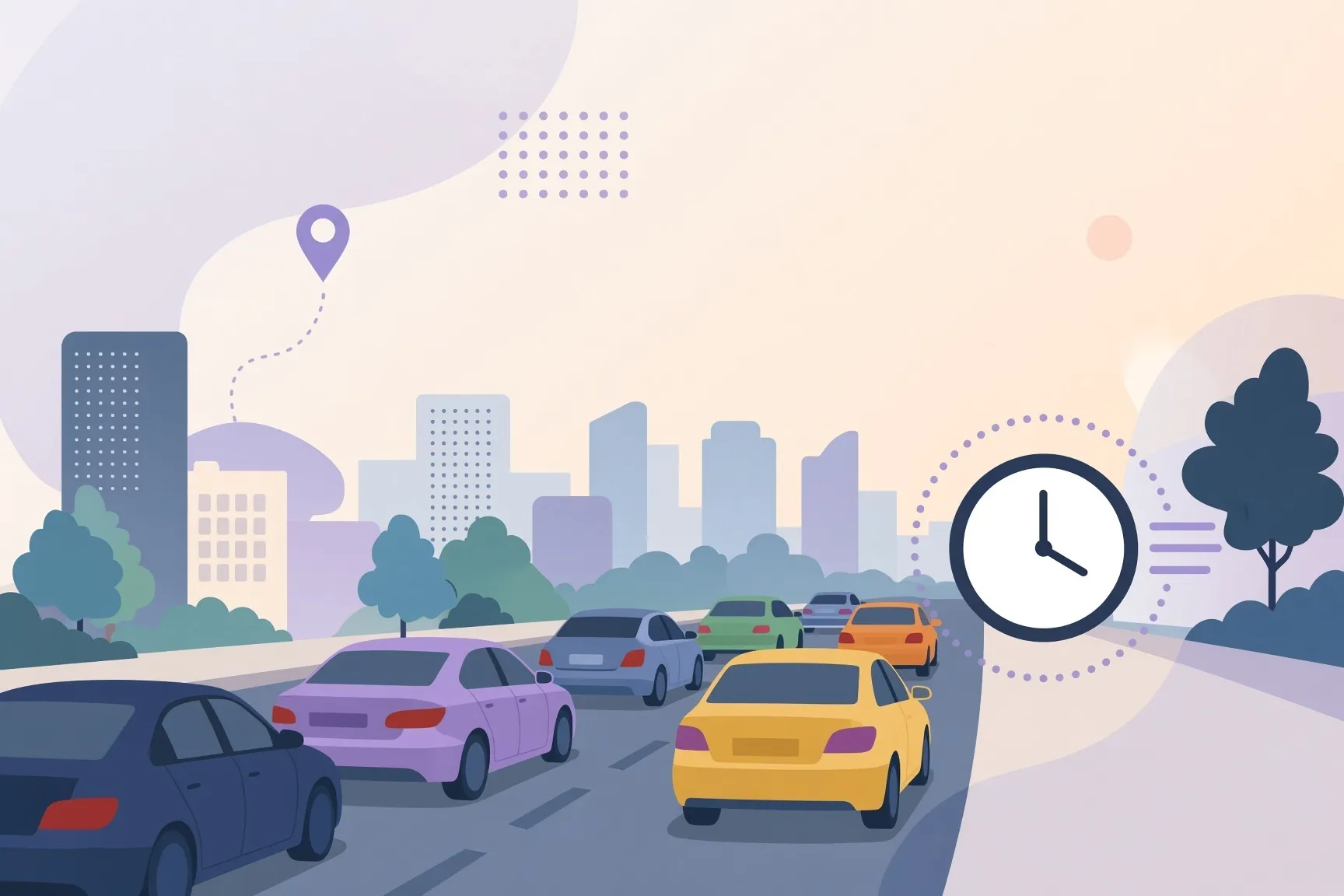
Why traffic is counted as wait time
Many users have raised concern that wait time increases in traffic.
This is not a Nagara-specific charge; it is how fare meters work under
government tariff rules. The same rules apply beyond Karnataka/Bengaluru too. It follows the international standard of Taximeters.
At low speeds or when the vehicle is stationary, time spent in
traffic is treated as waiting and charged according to those rates.
Examples from around the world
Regulators set a low cross-over speed - often near walking pace - so that time in congestion is charged as waiting. A few published schedules:
- Delhi: The 2023 Transport Department Notification specifies ₹0.75/minute (auto) and ₹1.00/minute (taxi) for every minute stuck in traffic or moving extremely slow (<6 km/h).
- Bangkok: Thailand's official fare rules charge ฿3.00 per minute when the taxi cannot move, or cannot travel more than 6 km/h (for example in a jam).
- Tokyo: The Tokyo Hire-Taxi Association rates table switches to time-and-distance fare when travelling at less than 10 km/h (¥100 per 1 minute 25 seconds in the 23 wards).
- Beijing: City tariff rules apply a low-speed / waiting charge when the cab is below 12 km/h (or stopped at the passenger's request).
The standard rule
Section 2.3.1.2 of the Taximeter standard mentions the concept of cross-over speed. Quoting from section 4.3(a) of the standard:
The fare is calculated from time-counting below the cross-over speed.
How Nagara applies this
After the ride starts (OTP), the Virtual Meter estimates speed from GPS. When speed falls below 3.6 km/h, that segment is treated as waiting - whether you are fully stopped or inching forward in congestion. The first 5 minutes of wait on a trip are free; only minutes beyond that are chargeable at government wait rates. Full detail is in What is wait time?.
Questions?
If you have questions about a specific ride or fare, contact us at hello@nagara.app or call +91 96200 20042.