
What is meter fare?
We receive both appreciation and complaints from customers about the fare. Some customers say the fare is reasonable, while others say it is too high.
We understand that fare is a sensitive topic and wanted to clarify our stance on it:
"We do not set the fare"
How much you are charged for a ride is decided by the Karnataka Transport Department. It is based on the distance travelled and the time taken. We just ensure we measure these accurately. We cannot increase a driver's earnings or reduce a passenger's cost because it's not in our control.
The confusion arises because some other apps and services have a different model of fare calculation. They use complex algorithms based on supply and demand, markup, customer profile, and other factors to calculate the fare.
Here is the formula we use:
Base Fare +

(Extra distance * Distance tariff) +
(Extra wait time * Time tariff)
This is shown in real-time on the app through the Virtual Meter.
The concept of taximeters
The idea of meters is over a century old and it works almost identically in every city that uses it. The German engineer Wilhelm Bruhn invented the modern taximeter in 1891, and the word taxi is simply a shortening of taximeter - the meter came first, and the vehicle was named after it.
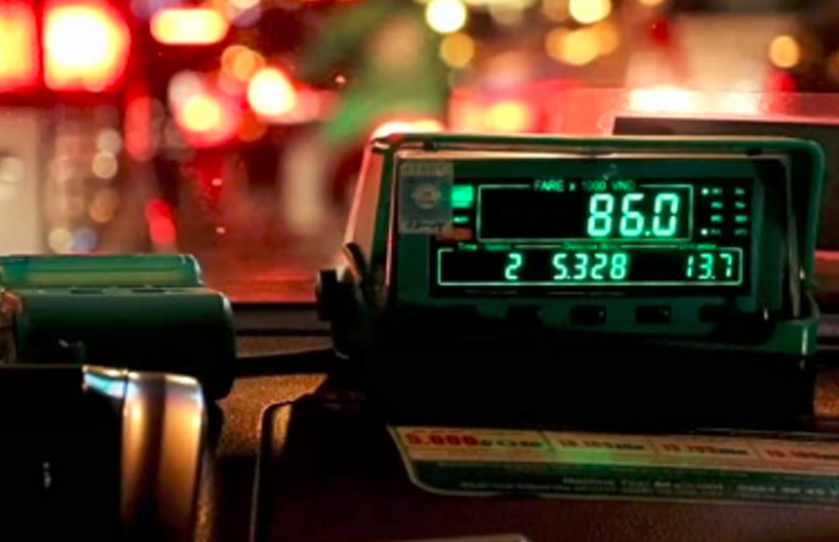
A meter is a legal measuring instrument
Most countries write their taxi fare rules against a shared international standard, OIML R 21, published by the International Organization of Legal Metrology. That standard is why a meter in Delhi, London, or New York shares the same vocabulary and the same skeleton - only the numbers on the fare card change.
What a meter fare is made of
Nearly every fare card in the world is built from the same four ingredients:
- Initial hire fee - also called flag fall or the drop charge. The amount the meter shows the moment it starts, before the vehicle has moved. It usually buys you an initial distance or an initial time - for example, a minimum fare that includes the first two kilometres.
- Distance tariff - an amount per kilometre or per mile, charged once the included distance runs out.
- Time tariff - an amount per hour or per minute, which covers the time the vehicle spends crawling or stationary. See our blog post for how this half works in detail.
- Supplementary charges - tolls, airport fees, luggage, or a night multiplier. These are entered separately and shown apart from the metered fare.
How physical meters count distance
Early meters were mechanical, bolted outside above the front wheel, and driven by the turning of the wheel itself. Electronic meters arrived in the 1980s and work on the same principle: the vehicle sends the meter a stream of electrical pulses as the wheels rotate, each pulse standing for a tiny slice of distance.
This is also the weak point of physical meters. Calibration is tied to tyre wear and pressure, seals have to be re-checked in person, and when the government revises the fare card every meter in the city has to be physically re-programmed and re-verified.
How Nagara's Virtual Meter fits in
Nagara's Virtual Meter implements this same model in software. Instead of counting pulses from a wheel, it measures distance from GPS points sent by the driver's phone, and instead of a calibration seal, its rates come from the government fare card for your vehicle type.
Our fare engine estimates speed for each short segment of the trip, and below 3.6 km/h - roughly walking pace - the segment counts as waiting rather than distance. Waiting is free for the first 5 minutes and charged per minute after that, exactly as the fare card specifies.
The advantage of doing this in software is that the parts of a physical meter that go wrong - a k constant drifting with tyre wear, a broken seal, an outdated tariff after a fare revision - simply do not apply. The fare card updates centrally, and every ride is itemised on screen while it happens.
Sources
- International taximeter standard: OIML R 21 (2007), Taximeters
- New York metered fares: NYC Taxi & Limousine Commission
- London taxi tariffs: Transport for London
- Government fare for Autos: thehindu.com